Billing that runs itself.
Enebill meters, bills, collects and reconciles every network you run on one ledger — checked by AI before an invoice can leave.
Most embedded networks are still billed on spreadsheets and goodwill.
Reads keyed by hand. Invoices sent one at a time. Reconciliation once a quarter, by which point the debt is old and the resident has moved on. It is not that the model is inelegant — it is that it loses money and creates regulatory exposure every period it runs.
Before arrears are visible
Quarter-end reconciliation is the first honest look at who has not paid. Every week of that delay is recovery you will not get back.
Between the meter and the money
Each one re-keys a number by hand, and every re-keyed number becomes a bill somebody on your team has to defend.
Of complaints are related to billing
Billing drove three in four complaints the Queensland energy ombudsman closed in 2024–25. Wrong bills cost more than late ones.
Seven manual steps vs. four automatic ones.
Seven manual steps become four automatic ones. Time-of-use pricing and demand charges are native, not workarounds, and people step in only where judgment is genuinely needed.
Every run checks itself before a bill can leave.
Gate meter reads validated, AI anomaly analysis with equipment fault detection, prior-period trend comparison — then issue and email. If something fails, the run stops.
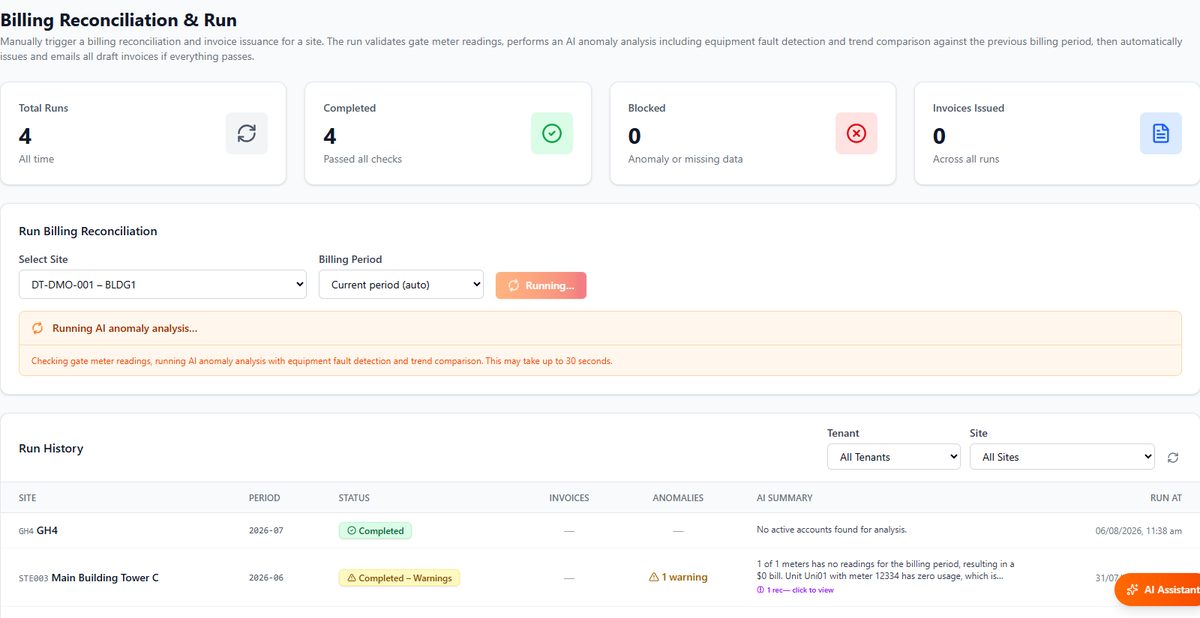
Wrong bills never ship
Anomalies block the run and the reason is written in plain English, not a status code.
Debt stays visible
Arrears surface the day they age, by unit, building and aging bucket, with dunning and retries already moving.
Reconciled every period
Gate meter against the sum of every unit and common-area meter, with unexplained variance flagged.
Every stakeholder answers their own question.
One ledger underneath, five views on top. No forwarded spreadsheets, no "let me check with the billing team" — which is how a portfolio grows without the enquiries growing with it.
The billing department, automated
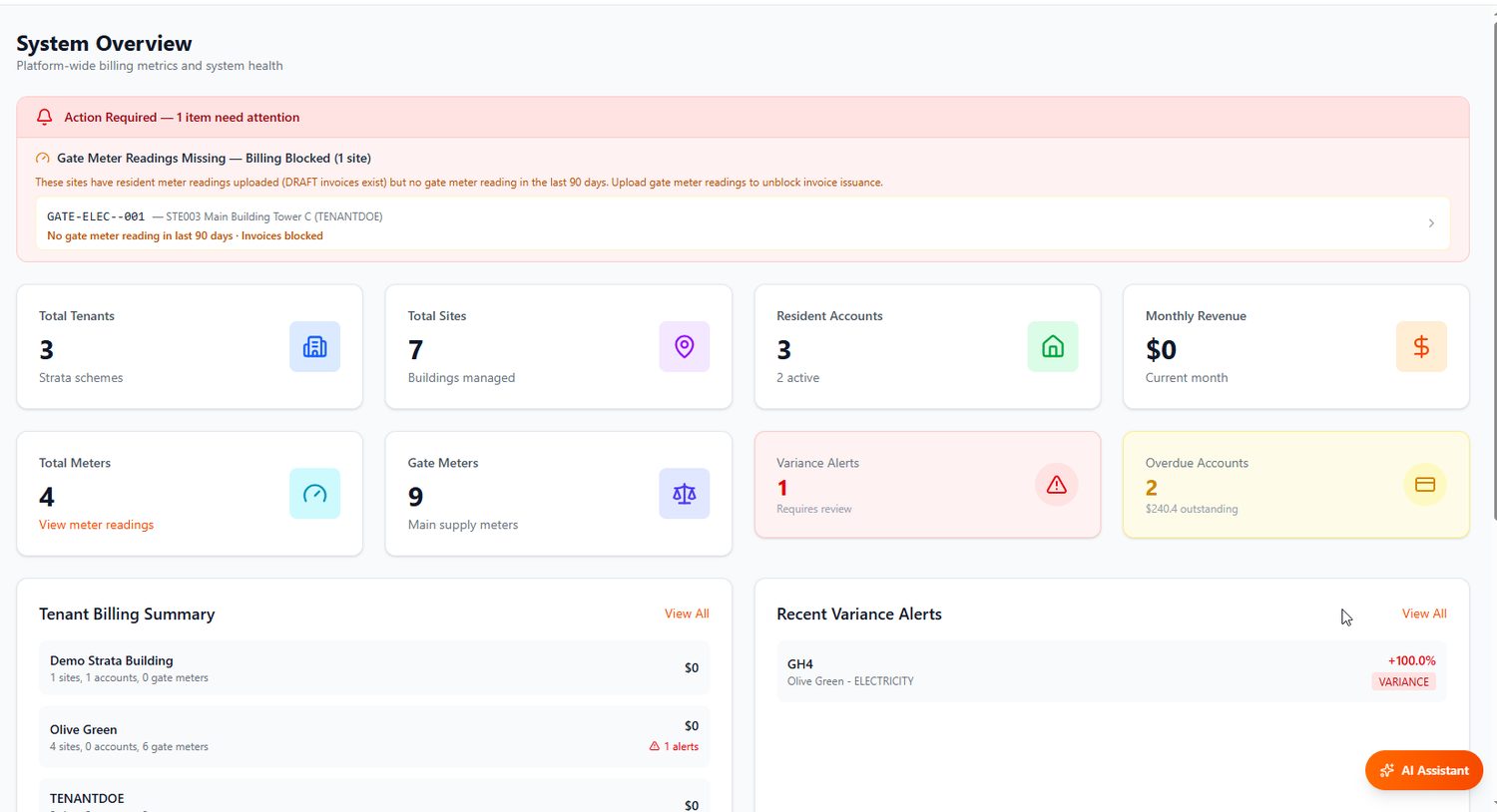
The engine room: metering, AI-checked billing runs, collections and compliance across the whole portfolio.
Trigger a run and Enebill validates the gate meter readings, runs the anomaly analysis, then issues and emails every invoice. Metering, collections and compliance for the whole portfolio in one place.
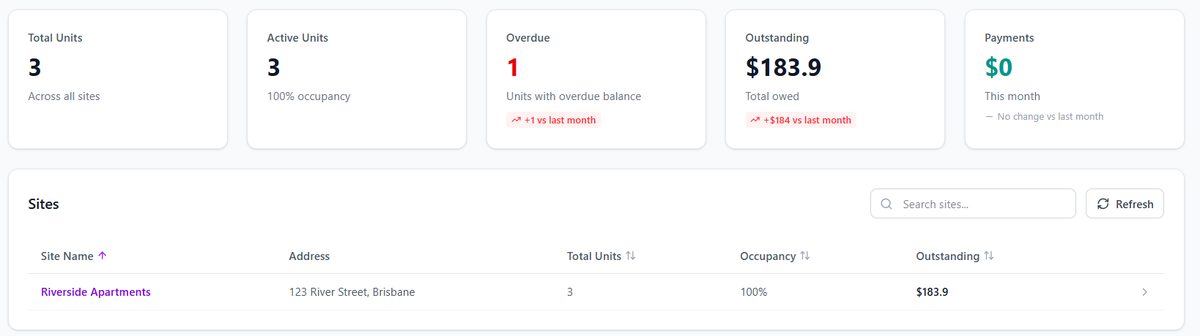
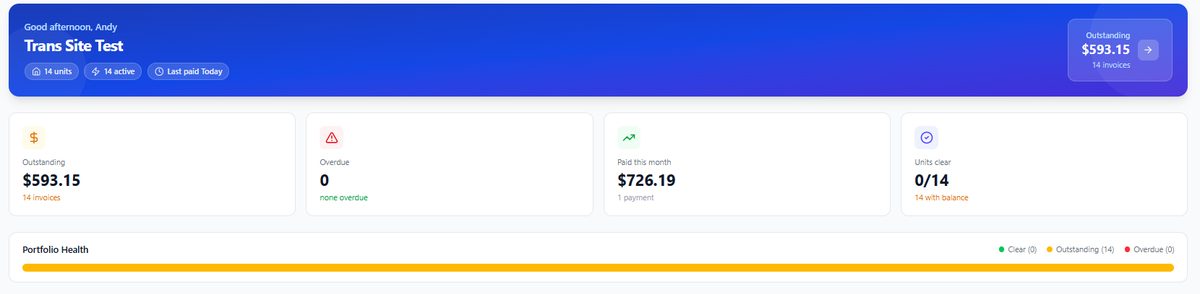
Every building's money, on one screen
Financial oversight across every building under management, on one screen.
Units, occupancy, overdue balances and payments across the whole portfolio — with movement against last month flagged in the number itself.
Transparency that ends the questions
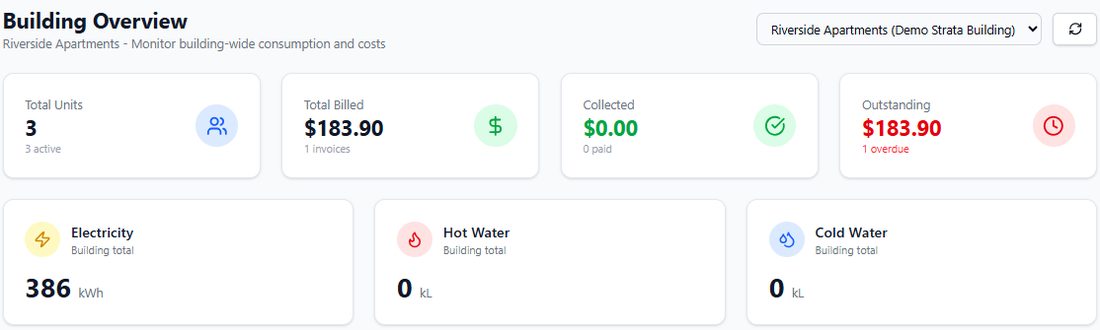
Building-wide consumption, billing and arrears without asking anyone for a report.
Consumption per utility and an aging breakdown showing exactly where debt sits and how old it is, visible to the committee that carries the accountability.
Every unit's bill, settled in one hit
Every managed unit's invoices in one place, payable in one action.
Serviced apartments, corporate leases and managed portfolios settle every outstanding invoice across their assigned units in a single payment, with receipts and history per unit.
Residents get clarity. You get quiet.
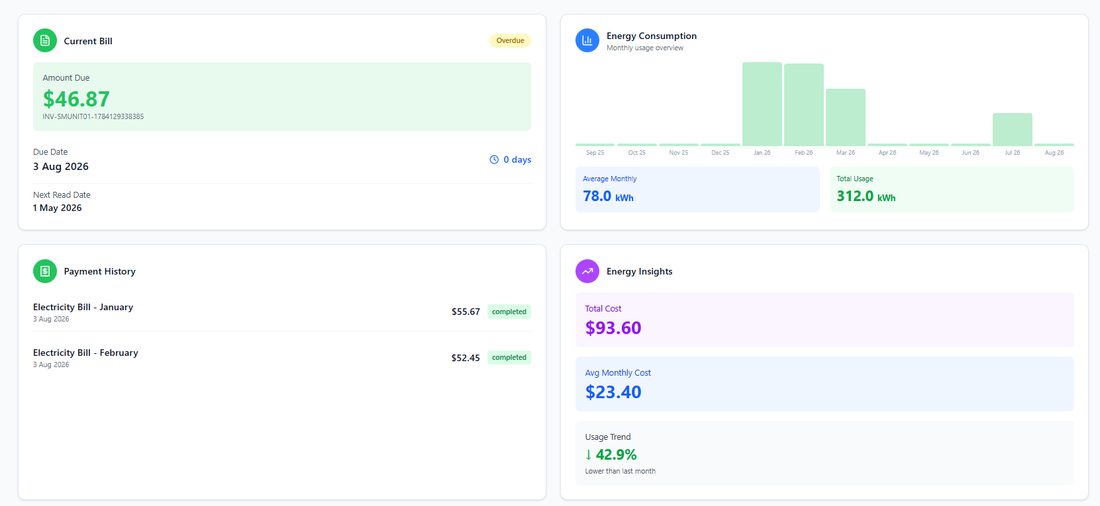
Clear bills, live usage and self-service payments, day or night.
Current bill, usage trends and payment history, with life support registration, hardship support and customer rights handled inside the portal rather than on a phone queue.
Switching used to mean rebuilding your data by hand.
Tariff variations nobody documented, occupants who left in 2019 and still hold a credit, opening balances that only reconcile if you know which column was fudged. That is the switching cost your incumbent is counting on.
It reads what you already have
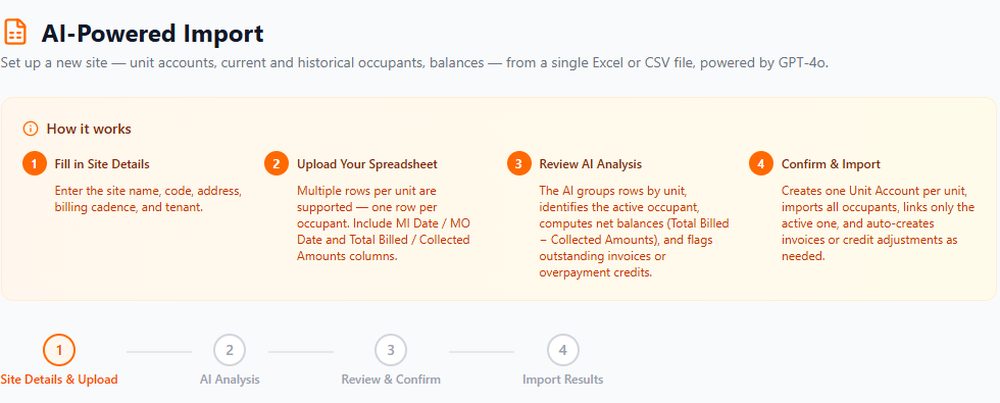
No prescribed template and no six-week mapping workshop. Upload the Excel or CSV your current system produces today.
Transformation, not import
Rows grouped by unit, the active occupant identified, net balances computed from billed and collected — the account model your spreadsheet only implies, rebuilt.
Nothing goes live until you sign off
Every migration is staged for review. You approve accounts, occupants and opening balances before a single invoice can issue.
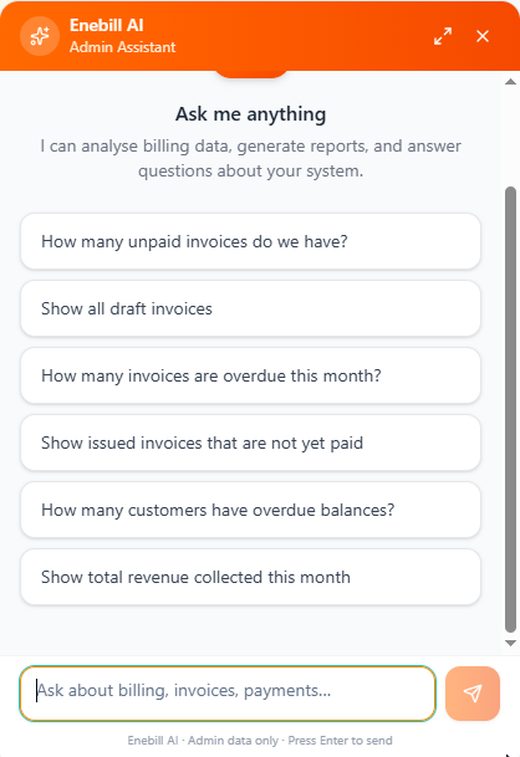
Ask it anything about your billing data.
Enebill AI sits in the Admin portal with your live billing data in front of it. No report builder, no export to a spreadsheet, no waiting on the one person who knows where the numbers live.
Analysis, not retrieval
Answers come back shaped for a decision, not handed over as a table to interpret.
Scoped to your admin data
It reads your billing data and nothing beyond it. It answers operational questions; it does not roam.
Billing questions are most of your phone line.
Billing drove three in four complaints the Queensland energy ombudsman closed in 2024–25. Put your own numbers in and see what answering that traffic by hand costs each year.
each year
each year
Baseline: 2,000 calls a year · 200 agent hours · $9,000 at $45/hour.
Illustrative model on your inputs, not an Enebill performance claim. The 80% default is Gartner's autonomous-resolution forecast for common service issues by 2029.
The next call should not need a person.
Where is my bill, what is this charge, can I pay it later. Multilingual voice agents will answer from the live ledger at any hour, take the payment or set up the plan, and escalate the rest with transcript and account attached.
You carry the exposure. We carry the defaults.
Embedded network billing is regulated, and it should be. Enebill is built so the right thing is the default thing — for the operator, and for every resident on the network.
AER Better Bills v2
Mandatory fields built into every invoice template.
Queensland-ready
Life support registration, concession tracking and move-out management aligned to state requirements.
Hardship workflows
Structured hardship and payment-plan handling, not ad-hoc spreadsheets.
Payments done properly
PCI-compliant card and direct debit processing on Stripe rails.
Reporting that reconciles
Aged AR, collections tracking, revenue reconciliation and GST/BAS reporting, export-ready.
Traceable end to end
Every read, every bill and every payment accounted for, from the gate meter to the receipt.
Also in the platform · disconnection management · retailer-change & opt-out requests · move-out management · dispute handling · tariff-change management · billing adjustments
Licence the platform, or hand us the billing.
Platform licence
For operators and agencies with a billing team and a portfolio to scale.
- Full admin portal and billing engine
- All five stakeholder portals
- AI reconciliation and assistant
Billing agency
For strata managers and body corporates who do not want to operate a platform at all.
- Metering, billing and collections managed end to end
- Your clients still get their own portals
- No platform for you to staff
Partnership
For retailers and agencies with an existing embedded network book.
- Migration scoped on a real site first
- Commercial model built to your volumes
- Branding and deployment per engagement
Bring a spreadsheet. Leave with a live building.
We build one of your sites in Enebill before the call, then walk you through your own numbers — and give you an honest answer on what migrating the book would take.
The things you'd ask on the first call.
How long does it take to get a site live?+
AI import builds a site from a single Excel or CSV file — unit accounts, current and historical occupants, opening balances, outstanding invoices and credits — and stages it for review before anything issues. The demo is deliberately run on your own spreadsheet so you can judge the answer for yourself rather than take ours.
Can we run multiple clients or schemes on one platform?+
Yes. The platform is multi-tenant by design: tenants, sites, meters and accounts are separated, and the admin portal reports across all of them or drills into any one of them.
What utilities does it bill?+
Electricity, hot water and cold water on one ledger, per unit and for common areas, with gate meter reconciliation across each billing period. Cadence is yours — most strata sites bill quarterly, some monthly.
How do payments work?+
Card and direct debit on Stripe rails with PCI-compliant processing, plus automated payment retries, smart dunning and debt-collection tracking behind them.
What stops a wrong bill going out?+
Every billing run validates gate meter readings and runs an AI anomaly analysis — equipment fault detection and trend comparison against the prior period. If something fails, the run is blocked and the reason is written in plain English rather than a status code.
What happens to balances and credits when we switch?+
Nothing goes live until you sign off. Accounts, occupants and opening balances — including credits held by occupants who have already moved out — are rebuilt from your export and staged for review. You approve them before a single invoice can issue.
Who fields resident enquiries — us or you?+
That is the difference between the two engagement models. On a platform licence your team runs billing with the portals absorbing routine questions. As a billing agency we run metering, billing and collections end to end, and your clients still get their own portals.
How are hardship and life support obligations handled?+
Inside the platform, not in a side spreadsheet. Life support registration, concession tracking, structured hardship and payment-plan workflows and move-out management are built in and aligned to state requirements, with AER Better Bills v2 fields in every invoice template.
Can the portals carry our brand?+
Branding and deployment are handled per engagement — bring it to the walkthrough and we'll tell you exactly what's possible for your setup rather than promise a configuration you may not get.
How is the commercial model set?+
To your volumes. Migration is scoped on a real site first, then the model is built around the size of the book you are billing rather than a list price you have to work backwards from.
What's live today versus on the roadmap?+
Everything shown in the portal screenshots on this page is running in the platform today. The AI voice agents, meter reader app, predictive arrears, dispute triage, leak detection, retailer bill intake and plain-English reporting are in development and labelled as such wherever they appear.
Something not answered here? hello@enebill.com